Maliki practice · A two-rak‘ah prayer prayed alone. For Subh, include the recommended qunut in the second rak‘ah. Illustrations simplify the main postures; learn fine details and individual adaptations with a qualified teacher.
Maliki sequence and distinctive practices: Ibn Abi Zayd’s Ar-Risala, chapter 10. Calm transitions: Bukhari 757. Prostration: Bukhari 812. Each phrase has its source below. Meanings of prayer phrases are teaching explanations, separate from published Quran translations. The tashahhud here follows Ar-Risala; the linked salah lesson uses another authentic wording. Illustrations supplied for this guide; teaching notes and illustrations have not yet had specialist review.
Loading the Quran recitations and meanings…
0/10
knowmyquranMaliki prayer · 1/16
Before you begin
Pray within its time, with ritual purification, suitable covering, a clean body, clothing and place, and facing the qibla. Make the intention in your heart for the prayer you are offering. Stand if able; seek guidance for praying seated or with limited movement.
knowmyquranMaliki prayer · 2/16
1 · Begin with the takbir
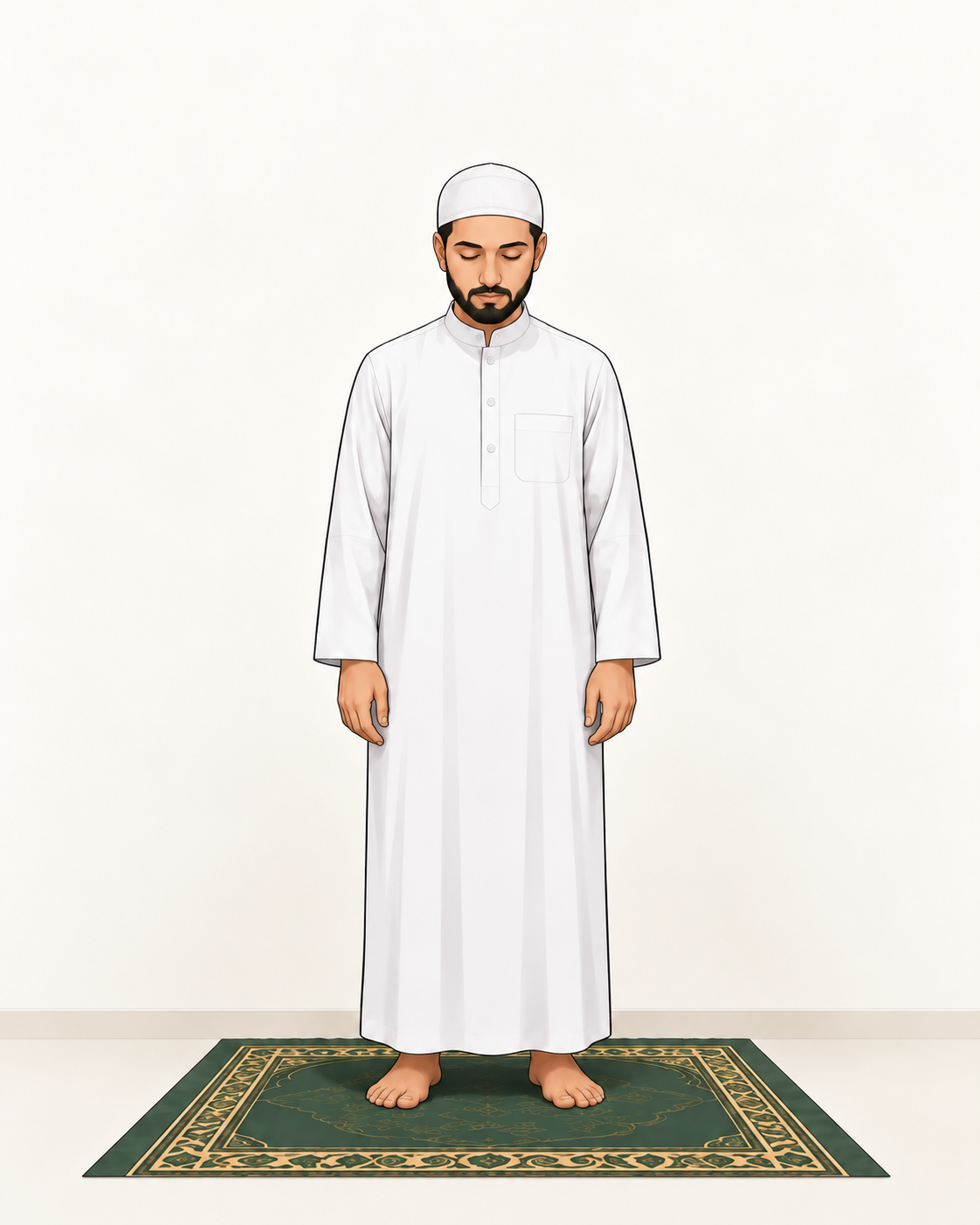
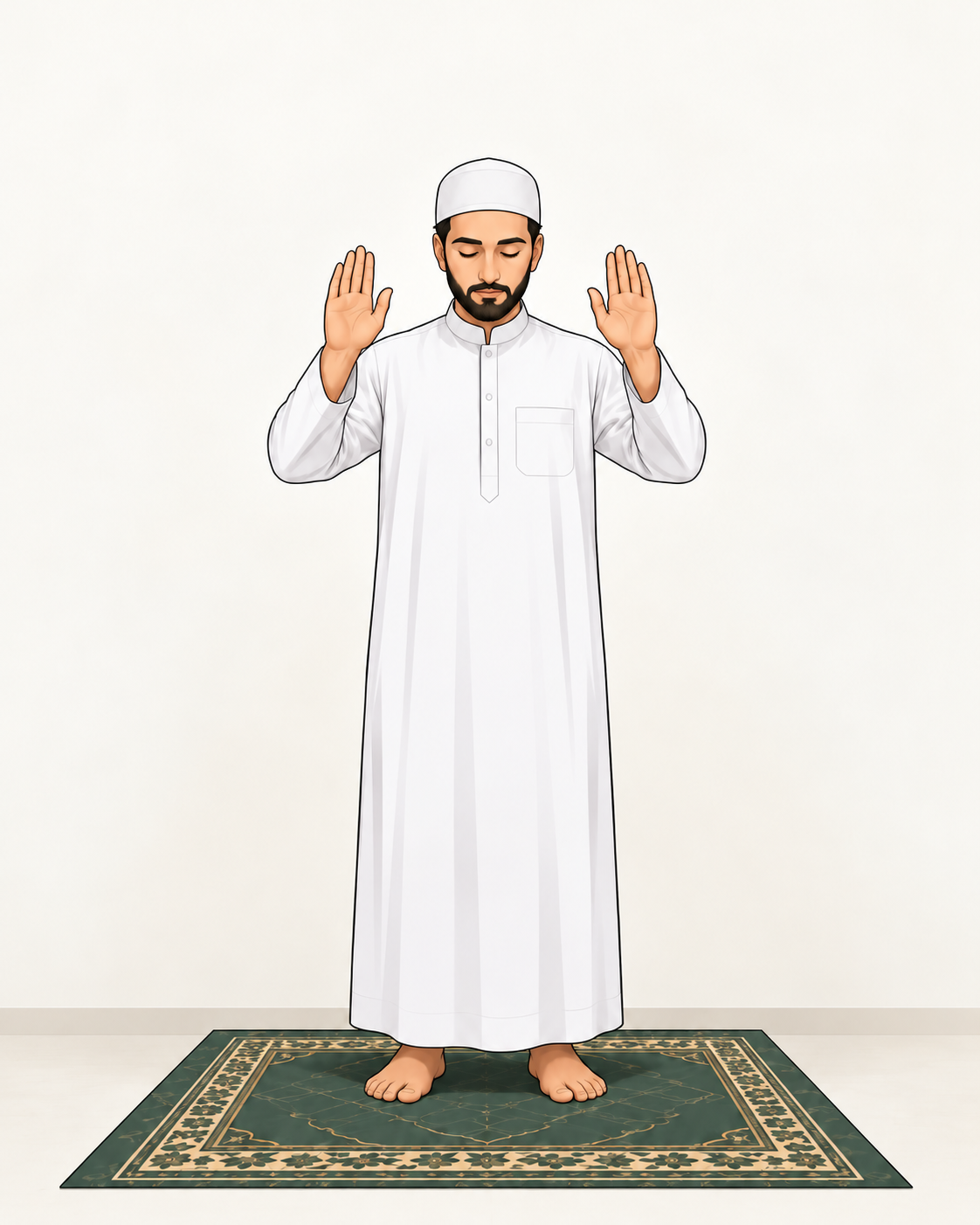
Stand facing the qibla. Raise your hands for the opening takbir, then lower them. This guide illustrates sadl: resting the arms at the sides, a well-known Maliki practice.
Recite Al-Fatiha. In the well-known Maliki practice for obligatory prayer, omit both the basmalah and the opening supplication. Begin with al-ḥamdu lillāh. When praying alone, say Amin quietly.
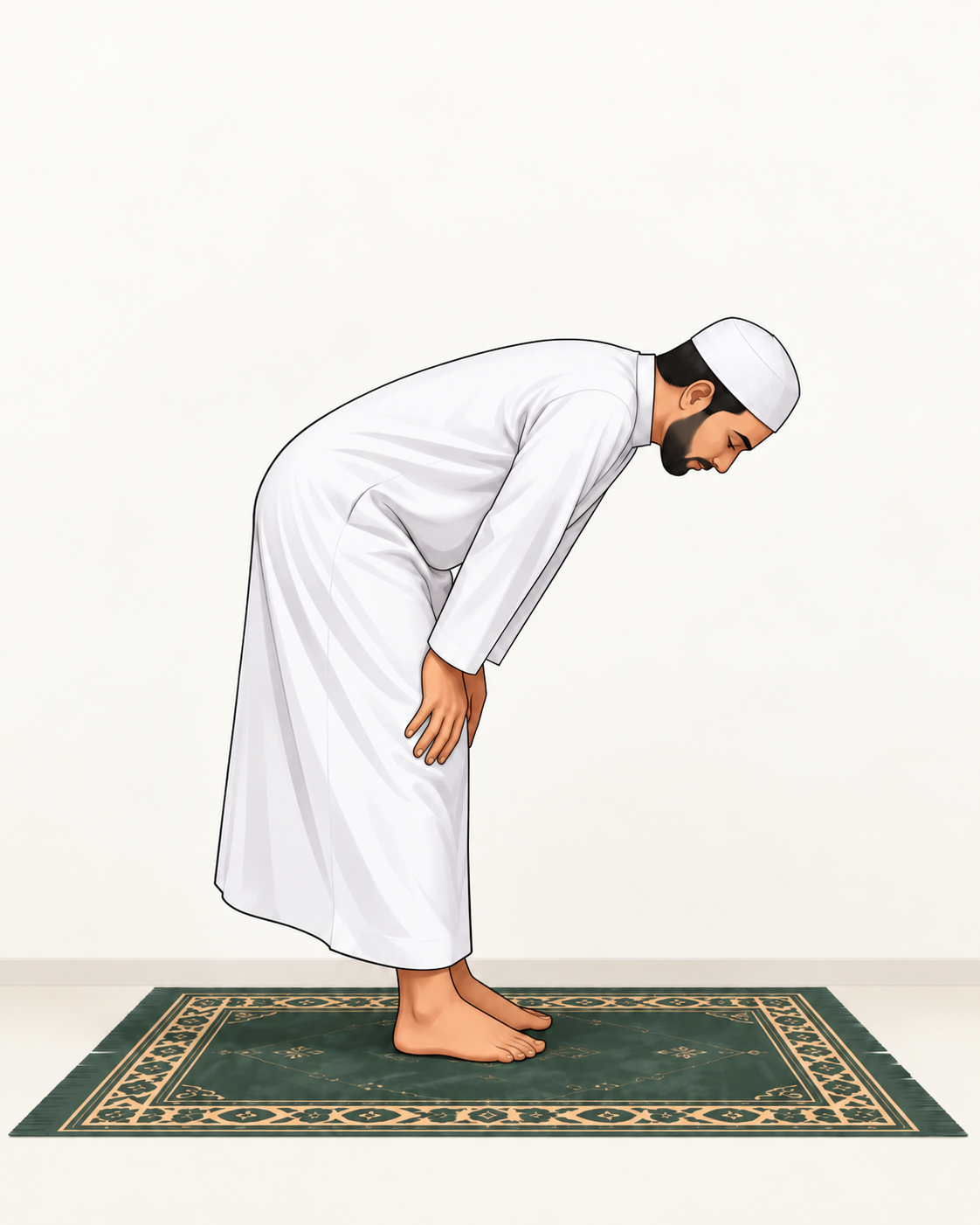
Say Allahu akbar as you bow. Rest your hands on your knees. Settle into the posture without rushing. The glorification below is a recommended remembrance.
سُبْحَانَ رَبِّيَ الْعَظِيمِ
Subḥāna rabbiyal-ʿaẓīm
My Lord, the Magnificent, is free from every imperfection.
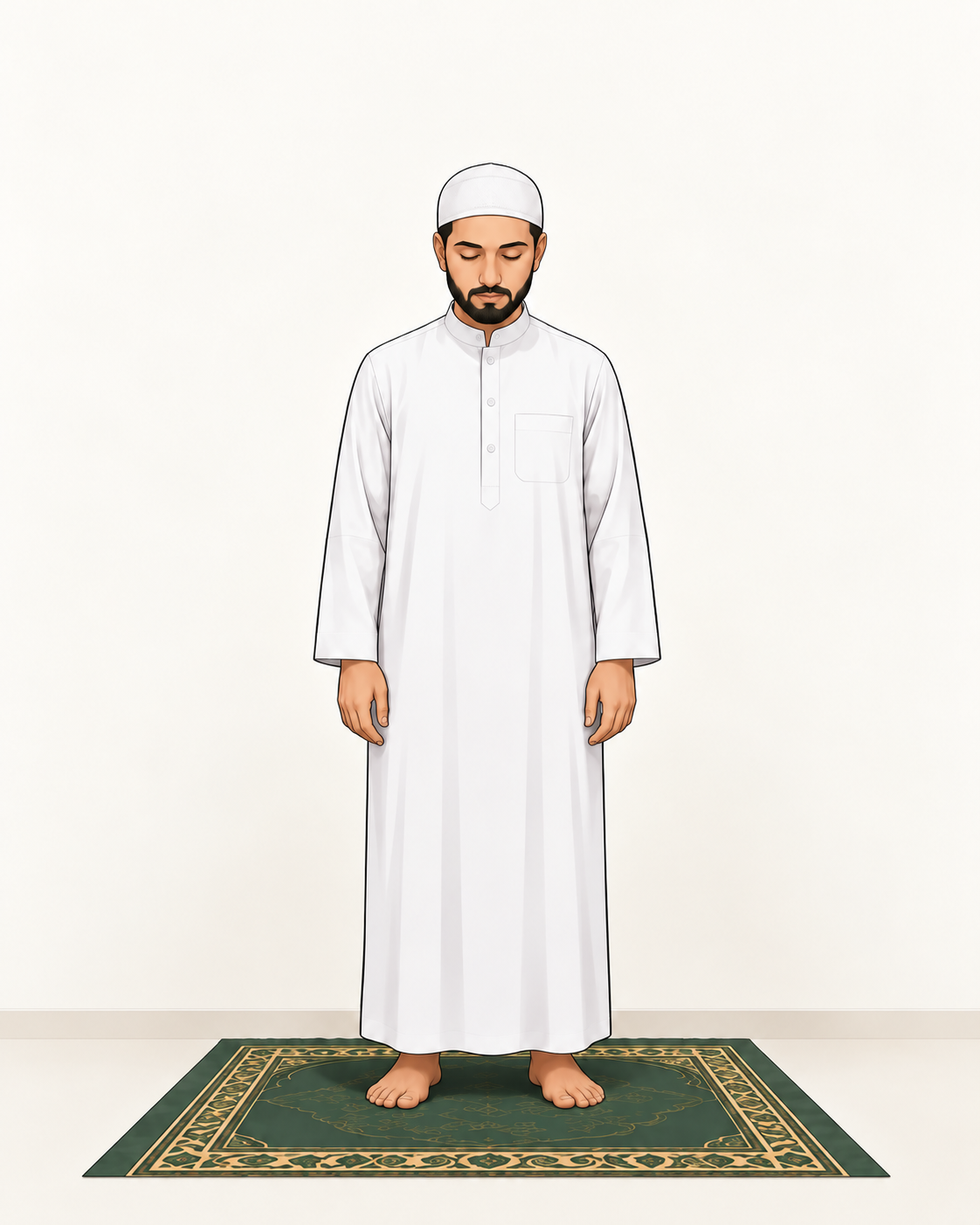
Rise to a fully standing position and pause. When praying alone, say the first phrase while standing up, followed by the words of praise. These two phrases have separate lessons in the salah course.
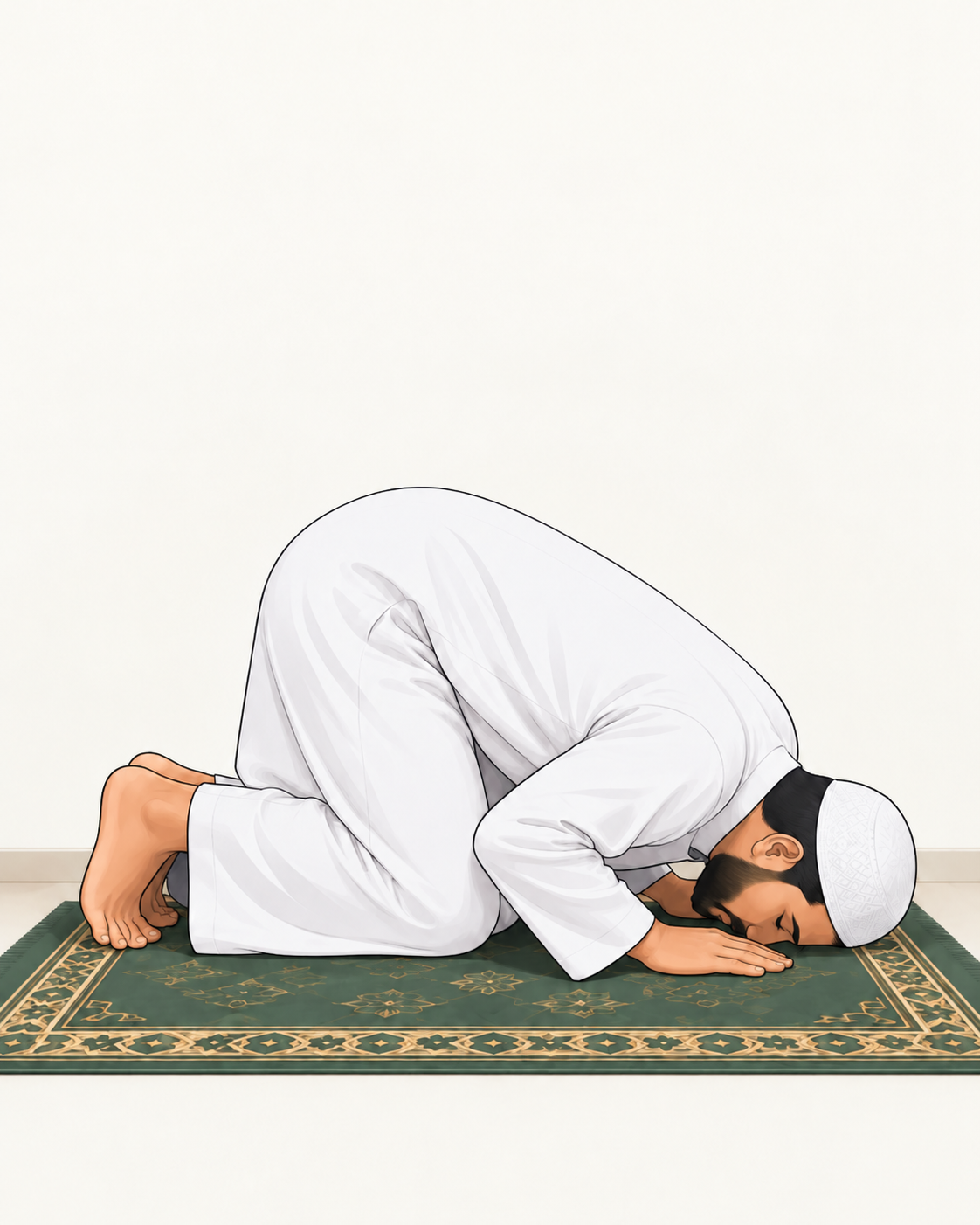
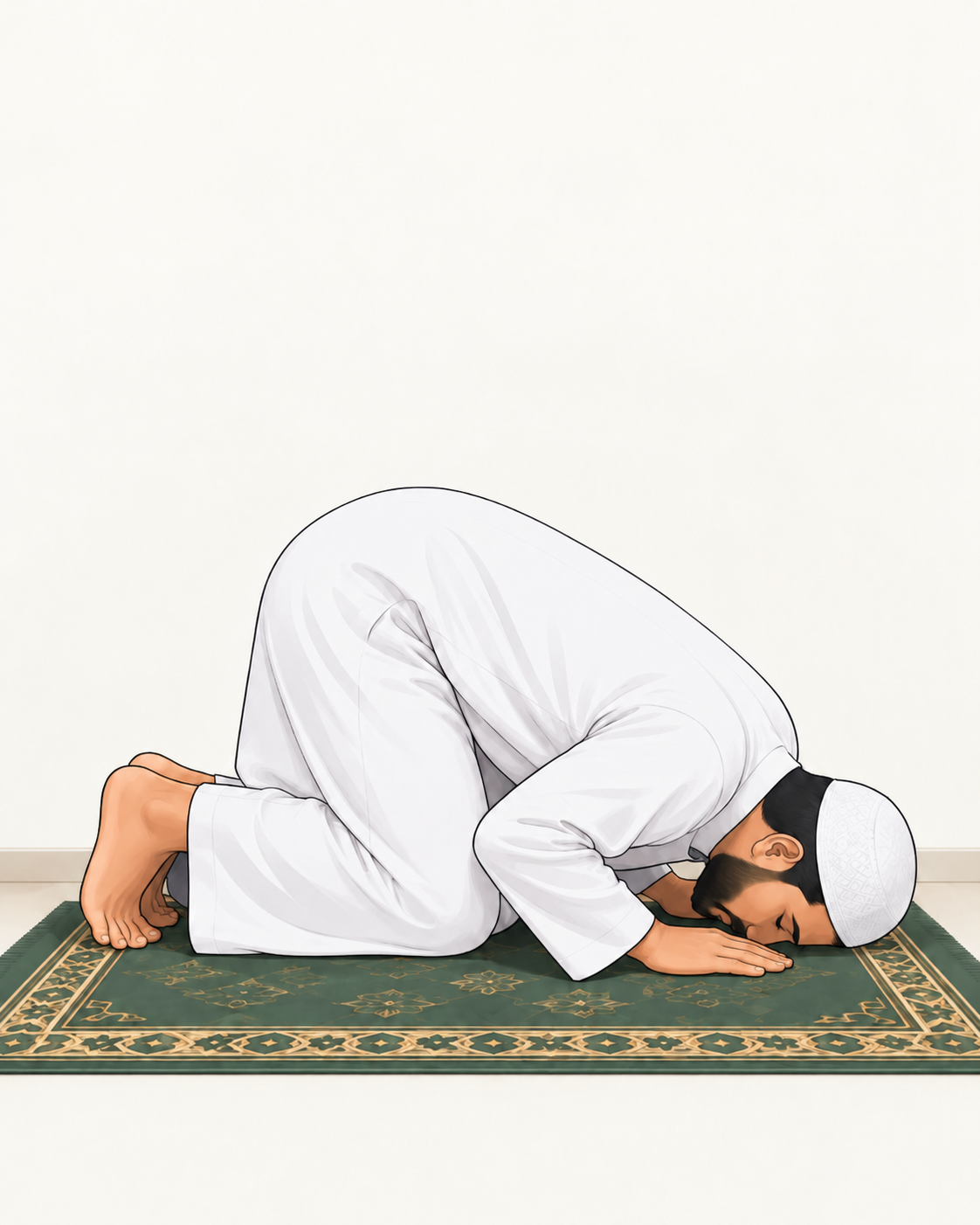
Say Allahu akbar as you descend. Place your forehead and nose, both palms, both knees and toes on the ground. Keep forearms lifted and settle calmly. Say the remembrance below.
سُبْحَانَ رَبِّيَ الْأَعْلَى
Subḥāna rabbiyal-aʿlā
My Lord, the Most High, is free from every imperfection.
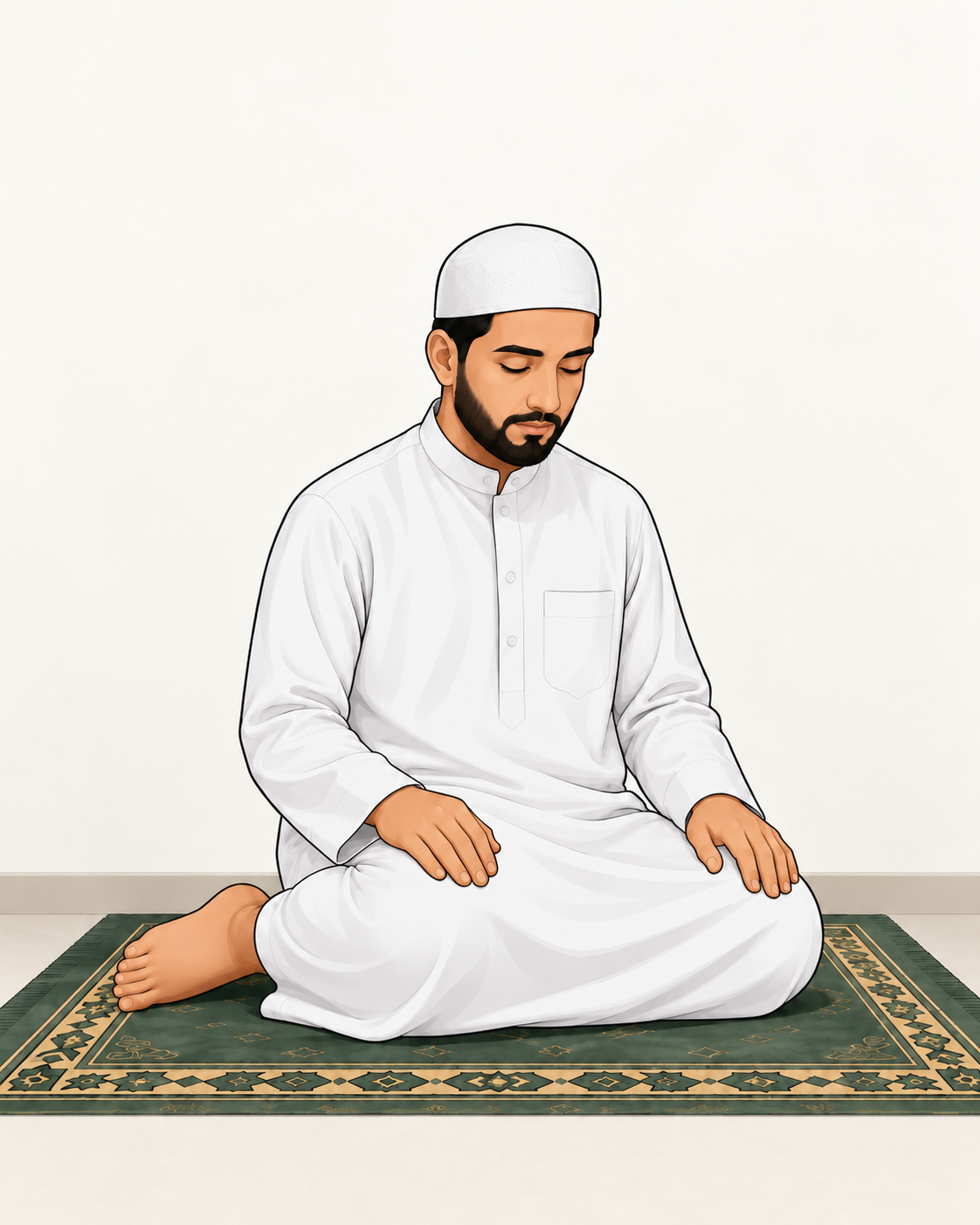
Say Allahu akbar while rising to sit. Sit upright with your hands resting near your knees. The forgiveness supplication below is one reported wording; reciting it is optional.
Say Allahu akbar and stand. Repeat Al-Fatiha, additional Quran, bowing, standing, first prostration, sitting and second prostration. For Subh, add the recommended qunut before bowing, as explained next.
knowmyquranMaliki prayer · 11/16
Subh only · Recommended qunut
For Subh, pause in the second rak‘ah after Quran recitation and before ruku‘. Recite qunut quietly without raising the hands, then continue with bowing and both prostrations. This is recommended, not a pillar.
Allāhumma innā nastaʿīnuka wa nastaghfiruka wa nuʾminu bika wa natawakkalu ʿalayka wa nakhnaʿu laka wa nakhlaʿu wa natruku man yakfuruk. Allāhumma iyyāka naʿbudu wa laka nuṣallī wa nasjudu wa ilayka nasʿā wa naḥfid. Narjū raḥmataka wa nakhāfu ʿadhābakal-jidd. Inna ʿadhābaka bil-kāfirīna mulḥiq.
O Allah, we seek Your help and forgiveness, believe in You, rely on You and submit to You. We turn away from those who reject You. You alone we worship; to You we pray and prostrate, and toward You we strive. We hope for Your mercy and fear Your certain punishment, which reaches those who disbelieve.
knowmyquranMaliki prayer · 12/16
10 · Sit for the tashahhud
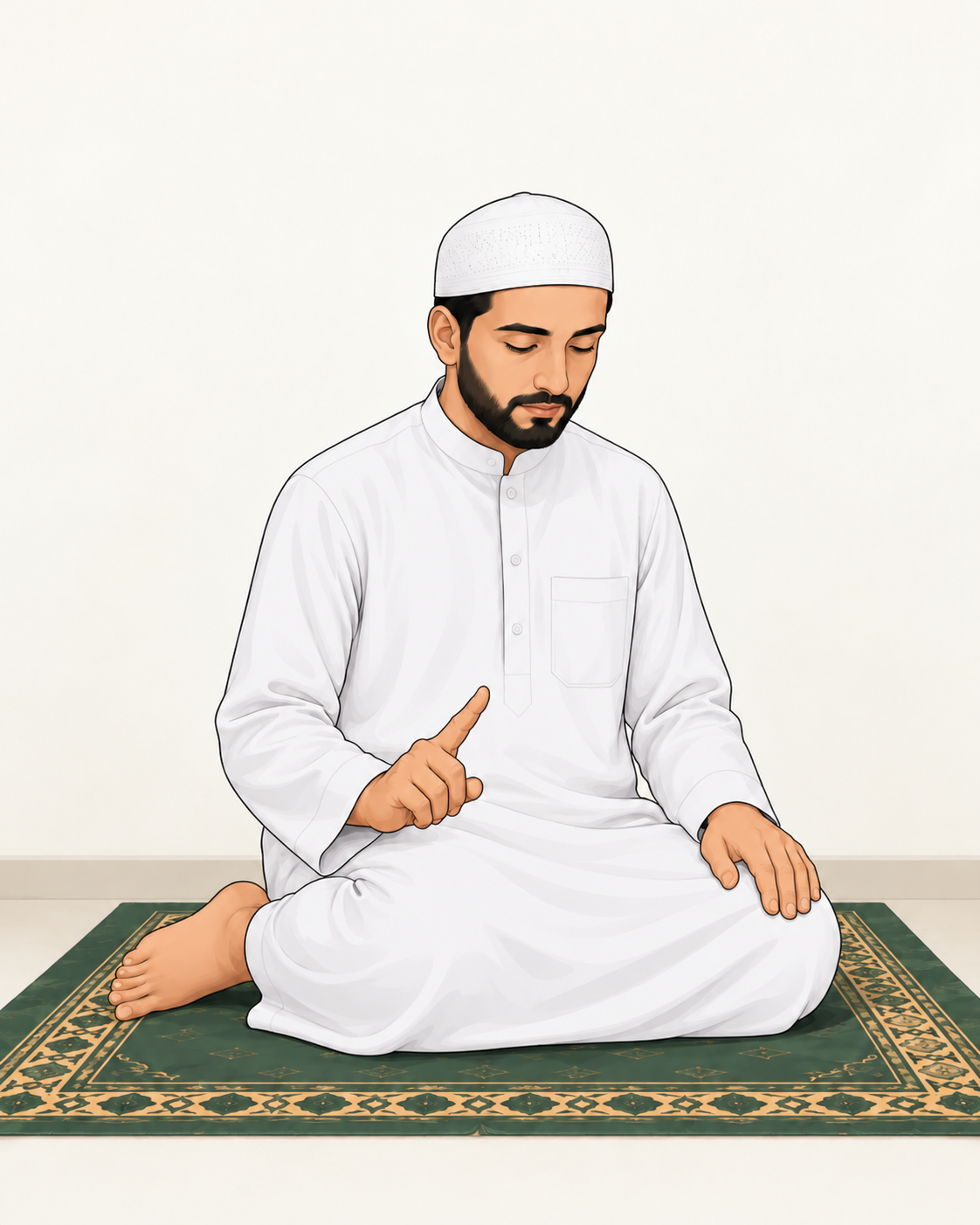
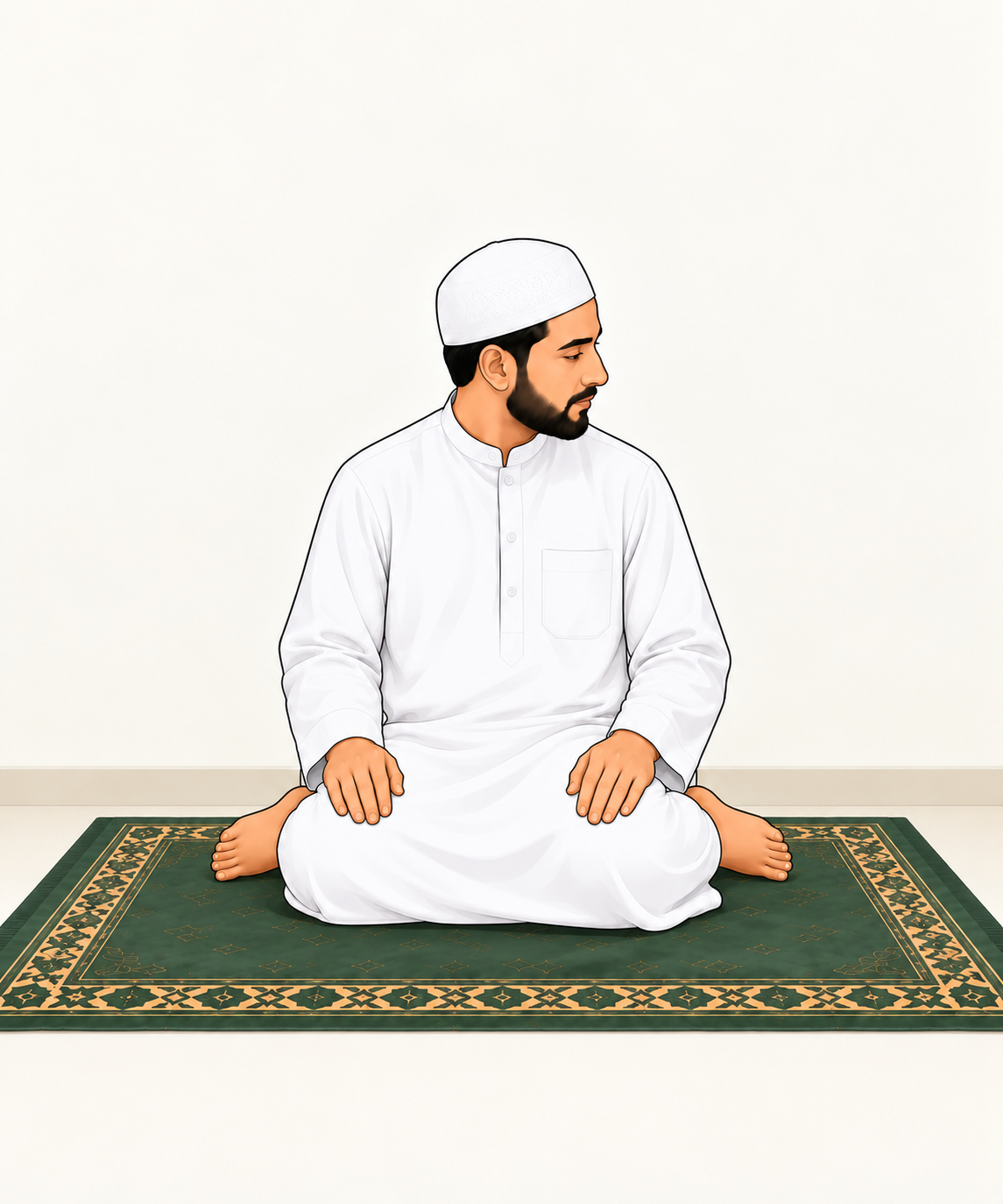
After the second rak‘ah’s second prostration, say Allahu akbar and sit. Use the Maliki sitting posture, with the left hip on the ground and right foot upright. This is the wording in Ar-Risala; the existing course teaches another authentic wording.
At-taḥiyyātu lillāh, az-zākiyātu lillāh, aṭ-ṭayyibātuṣ-ṣalawātu lillāh. As-salāmu ʿalayka ayyuhan-nabiyyu wa raḥmatullāhi wa barakātuh. As-salāmu ʿalaynā wa ʿalā ʿibādillāhiṣ-ṣāliḥīn. Ashhadu an lā ilāha illallāhu waḥdahu lā sharīka lah, wa ashhadu anna Muḥammadan ʿabduhu wa rasūluh.
Honor, pure deeds, good words and prayers belong to Allah. Peace be upon you, O Prophet, with Allah’s mercy and blessings. Peace be upon us and Allah’s righteous servants. I testify that none deserves worship except Allah alone, without partner, and that Muhammad is His servant and messenger.
In the final sitting, send blessings upon the Prophet ﷺ. This narrated wording is the same as in the salah lesson. You may then make a suitable supplication before the salam.
Allāhumma ṣalli ʿalā Muḥammadin wa ʿalā āli Muḥammadin kamā ṣallayta ʿalā Ibrāhīma wa ʿalā āli Ibrāhīma innaka ḥamīdun majīd. Allāhumma bārik ʿalā Muḥammadin wa ʿalā āli Muḥammadin kamā bārakta ʿalā Ibrāhīma wa ʿalā āli Ibrāhīma innaka ḥamīdun majīd.
O Allah, honor Muhammad and his family as You honored Ibrahim and his family. You are worthy of praise and glorious. O Allah, bless Muhammad and his family as You blessed Ibrahim and his family. You are worthy of praise and glorious.
For this Maliki example prayed alone, end with one salam, beginning facing forward and turning slightly right. Following an imam includes additional greeting responses; learn those separately.
السَّلَامُ عَلَيْكُمْ
As-salāmu ʿalaykum
Peace be upon you.
knowmyquranMaliki prayer · 15/16
After prayer - Final duaa
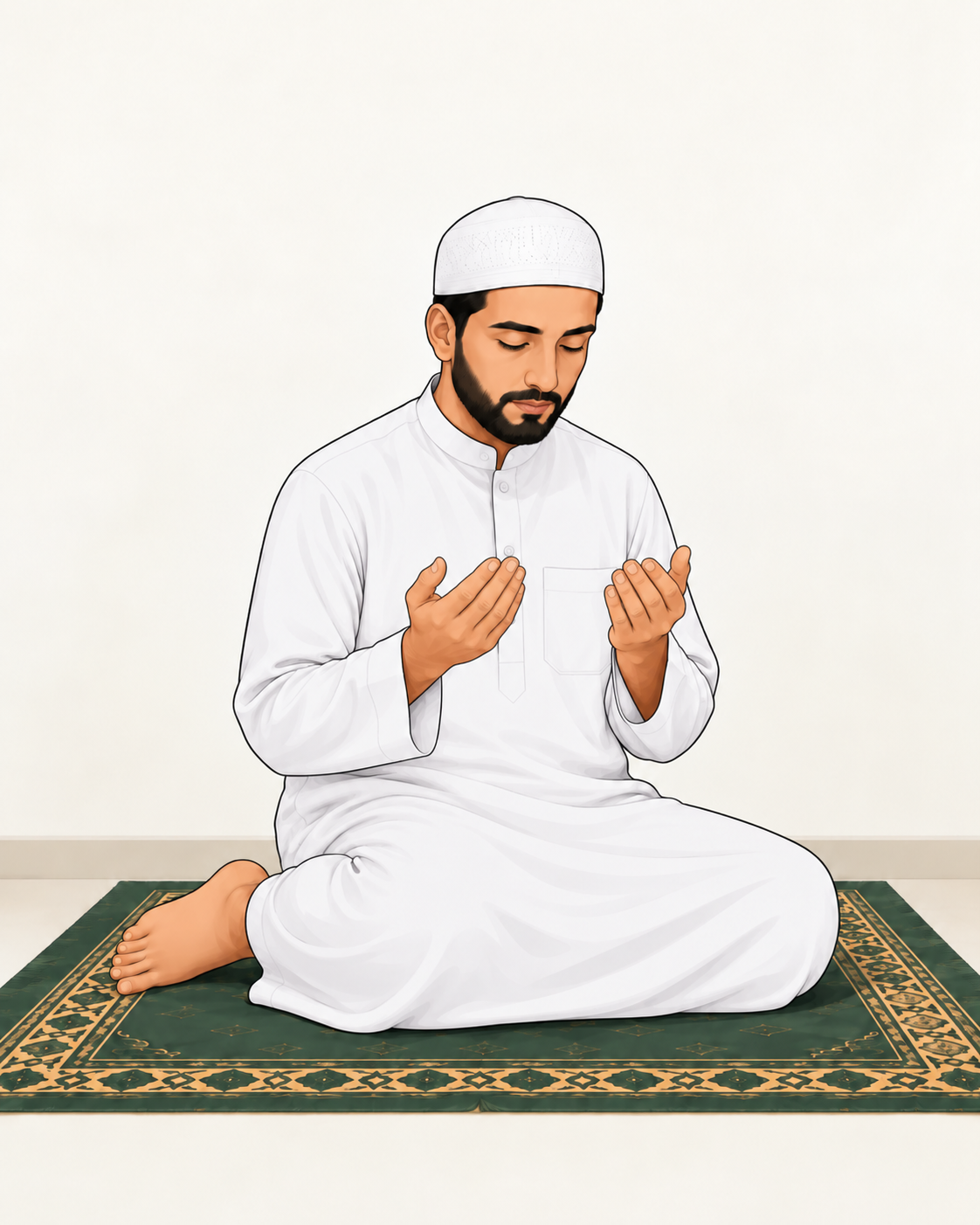
The prayer has ended with the salam. Make a personal supplication in your own words. This illustration shows duaa after the prayer, separate from its movements and recitations.
knowmyquranMaliki prayer · 16/16
Prayers with three or four rak‘ahs
Subh has 2 obligatory rak‘ahs; Dhuhr 4, ‘Asr 4, Maghrib 3 and ‘Isha 4. For 3 or 4, say the first tashahhud after rak‘ah 2, then rise instead of ending. Recite Al-Fatiha without an additional surah in later rak‘ahs. Finish with the final sitting and salam after the last rak‘ah.